The Prime Method: Navigating Your Health
When the usual options aren't there, do you know what to do next?
I'm Dr. Jon Jenkins, Dr. J. After more than a decade in urgent care and primary care, I've learned that most health decisions aren't made in a doctor's office. They're made at home at 2 a.m., in a hotel room after a canceled flight, or on the day the clinic is booked solid. I'll teach you how I think through them.
The framework
When to Wait
When monitoring at home is reasonable, and exactly what you're watching for.
How to Treat
Sensible first steps, home care, and the tools you already have.
When to Go
Recognizing when things have changed and you need a higher level of care.
Put yourself to the test
How would you answer these questions today?
Think about your answer first, then see mine.
I want to teach you how to answer these questions with confidence, today, tomorrow and for years to come.
Click below to learn more ↓Why navigation
You don't need to become a doctor. You need to know what to do next.
Every day in clinic, I hear the same question: "Did I actually need to come in?" Sometimes yes. Sometimes I wish they'd come sooner. And sometimes nobody ever taught them what to look for. Here's why that matters.
Most decisions happen in the Grey Zone
Between "I know exactly what to do" and "this is obviously an emergency" sits nearly everything: the cough, the fever, the twisted ankle, the cut that might need stitches. That's where people get stuck.
Waiting too long has a cost
A man in his twenties had been sick for over a week. "I just can't seem to kick it." His oxygen was low and the X-ray showed severe pneumonia. Three days earlier, he likely could have avoided the hospital.
Going in when you didn't need to costs too
A young woman came in with an early cold, mostly for a work note. Everything I told her (how to treat it, what to watch for, when to come back) she could have known before she lost half a day and a copay.
More information isn't more understanding
Google, AI and influencers hand you possibilities. A pulse oximeter gives you a number, not a diagnosis. Without a framework, more information usually means more worry.
Access isn't guaranteed
Storms, outages, canceled flights, holiday weekends, a week-long wait for an appointment. Care is not always one phone call away, and the plan has to work when it isn't.
Someone is counting on you
The parent with a feverish child at 2 a.m. The adult child managing a parent's medications. In most families, one person ends up being the navigator. It helps to have been taught how.
Real life
What navigating your health actually looks like
Scenarios are illustrative. Patient stories are composites from my clinical practice, with details changed to protect privacy.
The method
I don't want you memorizing answers. I want you understanding the decision.
Underneath When to Wait, How to Treat and When to Go is one question: what information changes the decision? These are the things I weigh with every patient, and the things you'll learn to weigh too.
How bad is it right now?
Better, the same, or worse?
Can you eat, drink, walk, sleep, work?
Age, other conditions, medications.
And how you responded to it.
What's the realistic risk of watching another day?
Four sessions. Six tools. Then we talk.
SESSION 1 · READING THE MAP
Welcome to the Grey Zone
SESSION 2 · THE COMMON DETOURS
The Grey of Everyday Health
SESSION 3 · STAYING CALM AT THE FORK
Mindset and Mindfulness
SESSION 4 · CHARTING YOUR COURSE
Taking Control Before It Matters
Your six tools: My Health Snapshot · Doctor Visit Sheet · My Disease Map · My Current Health Plan · My Personal Prime Health Plan · Household Preparedness Plan
Programs
Choose the path that's right for you
Every full program includes the four sessions and six tools, and a 7-day money-back guarantee.
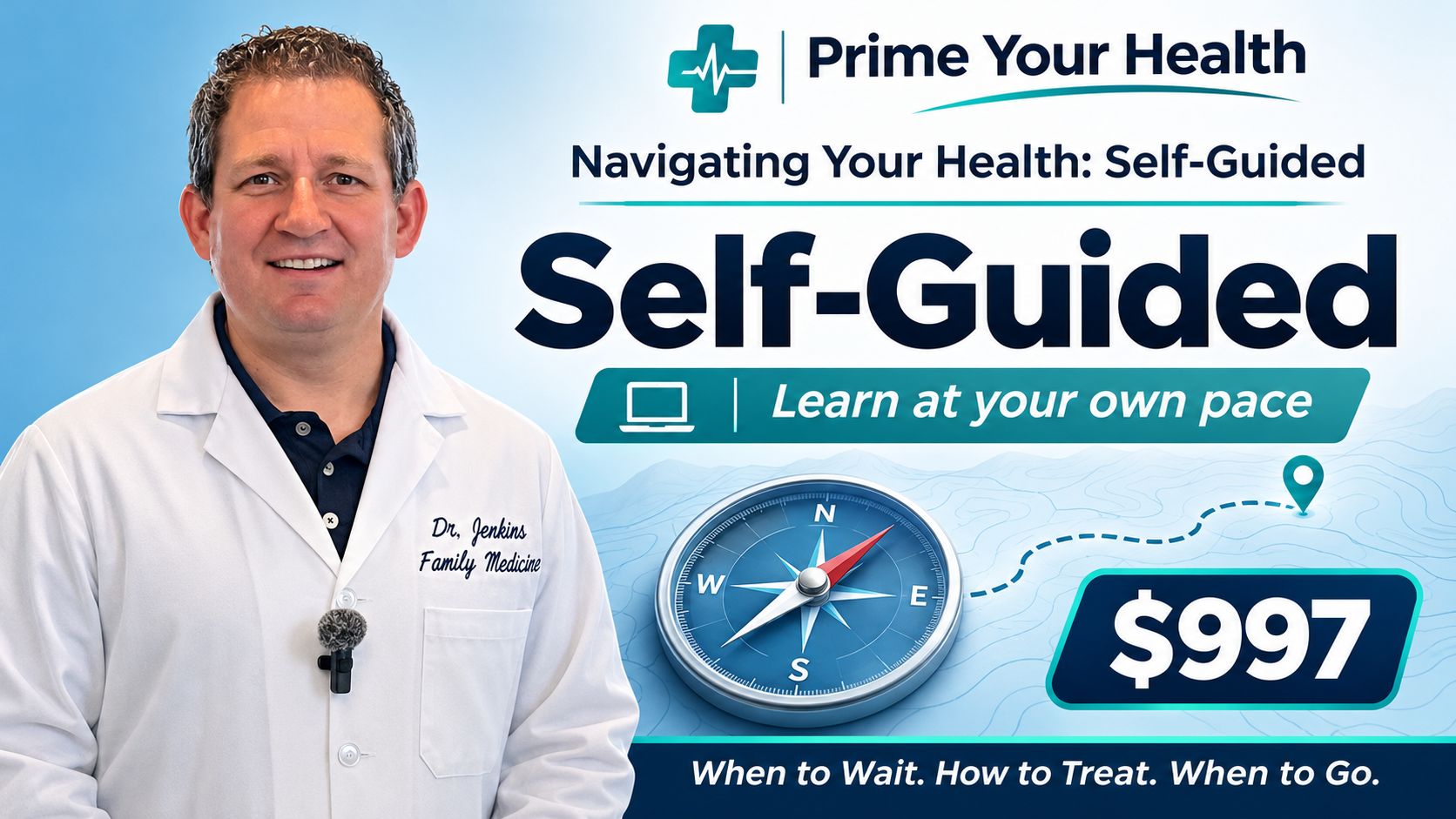 Self-Guided
$997
All four sessions and six tools, at your own pace. Built for people who want the framework and will do the work.
Hover to see what's included
Choose Self-Guided →
What you'll learnThe complete Prime Method, at your own pace. You learn to think through health decisions the way a physician does, and you build a plan your family can use when care isn't one phone call away.Reading the Map. Welcome to the Grey Zone, where most health decisions really happen.The Common Detours. The everyday illnesses and injuries that send people to urgent care, and what actually changes the decision.Staying Calm at the Fork. Mindset and mindfulness, so you can think clearly when it's your family.Taking Control Before It Matters. Organize your family's health information and prepare for the days when normal systems aren't available.Plus six health documents you fill in and keep, from a Doctor Visit Sheet to a Household Preparedness Plan.7-day money-back guarantee.
Recommended
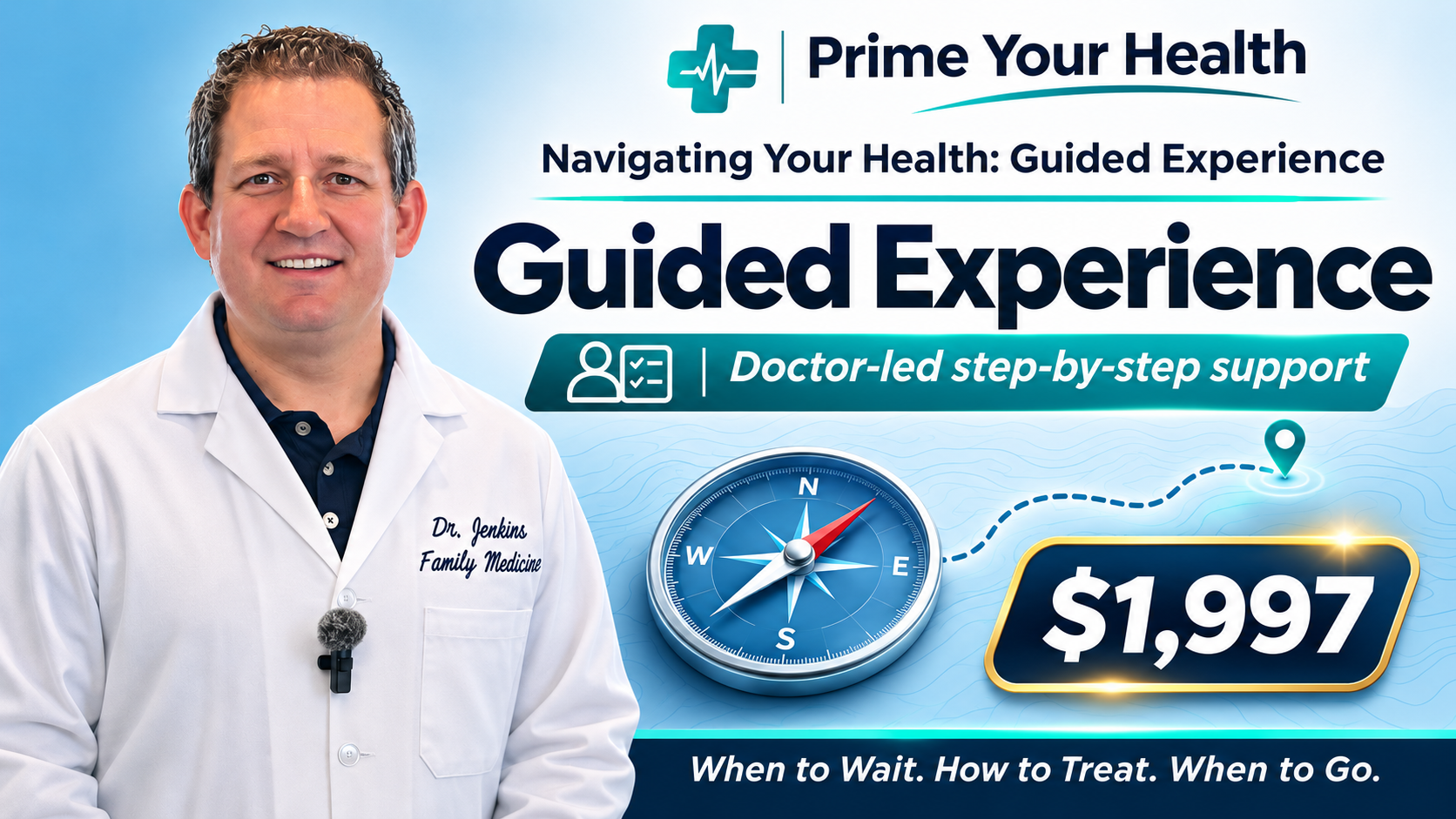 Guided Experience
$1,997
Everything in Self-Guided, plus a one-on-one conversation with me after you finish the training to talk through your plan and your questions.
Hover to see what's included
Choose the Guided Experience →
What you'll getFor people who want the full framework and a physician to check their thinking.All four sessions and six health documents, so you learn when to wait, how to treat and when to go.A one-on-one navigation call with me when you finish. We go through your Health Navigation Plan, your health concerns and your questions, so you leave knowing the plan fits you and your family.Limited to 100 participants. 7-day money-back guarantee.
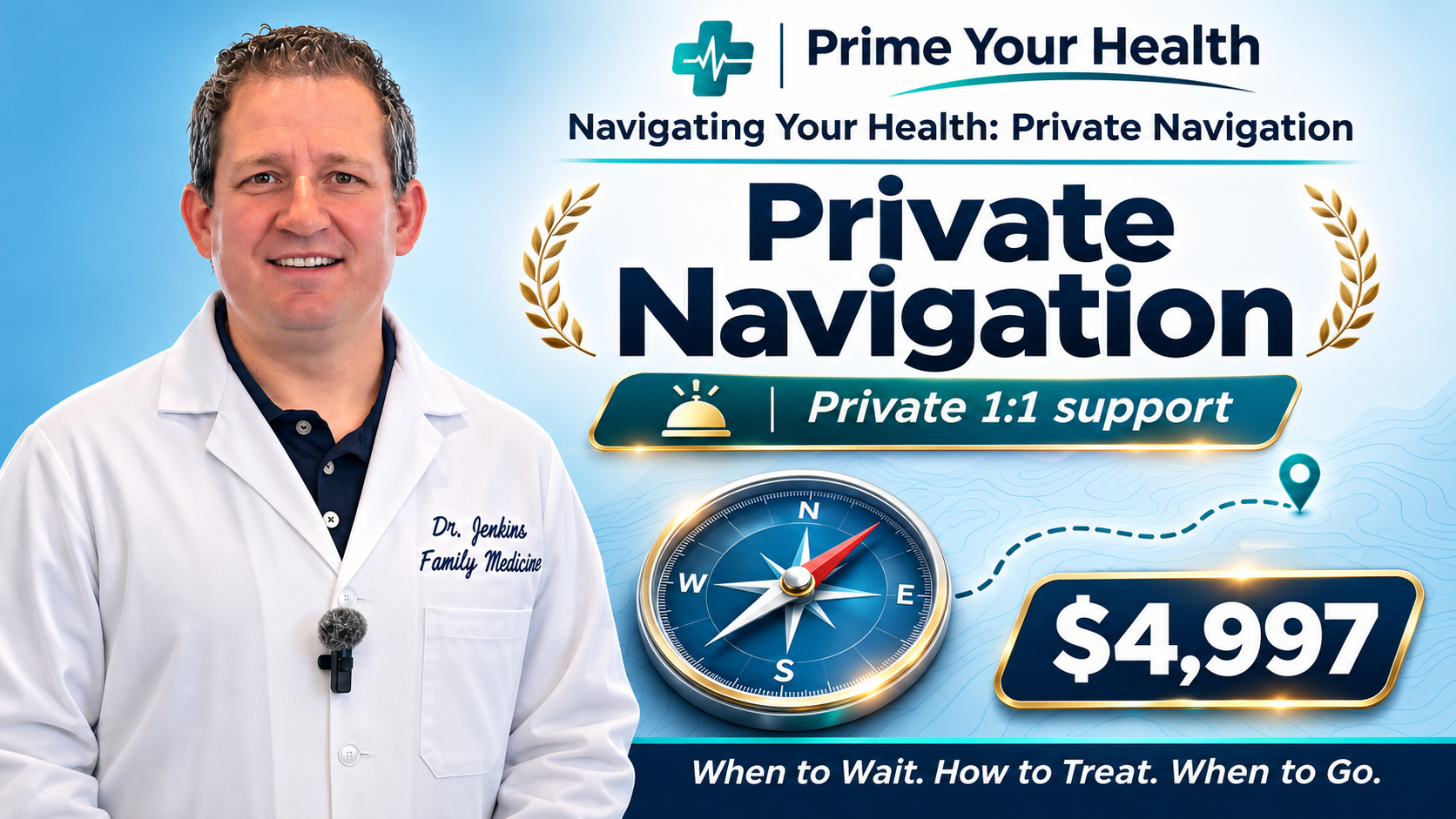 Private Navigation
$4,997
One-on-one calls with me through the program, plus three months of Health Navigation Office Hours included. My most personal level of support.
Hover to see what's included
Choose Private Navigation →
What you'll getMy most personal level of support. I walk through the program with you, not just at the end.Session 1, right away. We talk through your health concerns and how to get the most out of the course.After Session 2. What came up for you, and how to apply it to your own health.After Session 3. Your questions, and how you're handling the decisions at the fork.Final session. We go through your forms and bring your Health Navigation Plan together.Each private session is 30 minutes with me. Three months of weekly Health Navigation Office Hours are included, then $197/month unless canceled.Limited to 25 participants. 7-day money-back guarantee.
Not ready for the full program?
Start smaller. Both are one-time purchases.
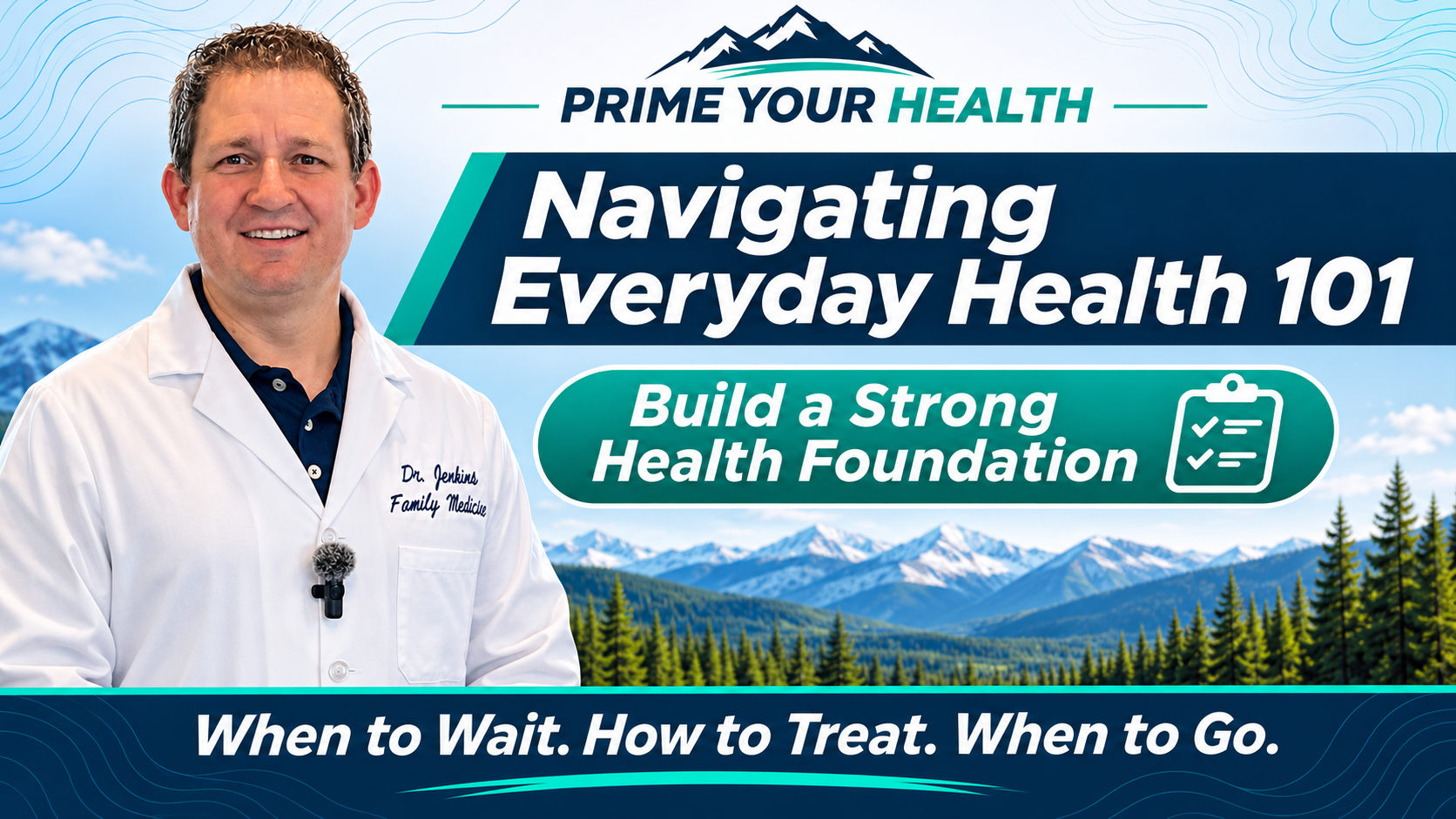 Navigating Everyday Health 101
$297
Home monitoring, everyday care and care for your kids. The foundation for handling common problems at home, and it counts toward a full program later.
Hover to see what's included
Get Everyday Health 101 →
What you'll learnTaking care of coughs, colds, fevers and those anxiety-causing moments when someone at home isn't feeling well and you're not sure what to do.Home Monitoring. Read your thermometer, pulse oximeter and blood pressure cuff with confidence, and know which numbers actually matter.Everyday Care. The common problems I see in urgent care every day: when it's safe to wait, how to treat at home, and when it's time to go in.Everyday Care for Your Kids. Fevers, coughs and the moments that worry parents most, and how the decision changes when it's your child.$297 one-time. It counts toward a full program if you upgrade later.
 The Navigator's Field Guide
$47
Quick references for the moment of need: what to do, home treatments, and when to go.
Hover to see what's included
Get the Field Guide →
What's insideQuick answers for the moment of need. When someone is sick or hurt and you need to know what to do right now, it's in your hands.What to do first, before you panic or start searching online.Home treatments that make sense for common problems.When to go. The signs that mean it's time for urgent care or the ER.$47 one-time.
About Dr. J
It comes from real visits, not theory.
I've spent more than ten years in urgent care and primary care. Most of my day isn't prescriptions or tests. It's explaining what this probably is, what you can do, what to watch, and what would change the plan.
I'm not here to keep you out of healthcare. There's a time for home care, a time for your doctor, and a time for the ER. I'm here to help you know which is which, and to use the system better when you need it.
Health confidence isn't knowing everything. It's knowing what to do next.
Preparedness
Nations are counseling their citizens to prepare for the unexpected.
I pay attention when institutions built to handle emergencies begin preparing for their own. Air travel was recently grounded nationwide. Governments are counseling their citizens to prepare for the unexpected. The U.S. military now expects its bases to operate on their own for 90 days.* I believe that is sound counsel for every family as well.
But preparedness is more than power and light. A three-month supply, drinking water and a financial reserve* are the foundation. Injuries and illnesses, however, don't take a vacation because the power is off or flights are grounded. A child's fever still climbs. A cut still needs care. A cough can still turn into pneumonia.
When help is delayed or out of reach, knowing how to care for your body and your family's health is not optional. It is essential.
"If ye are prepared ye shall not fear."*
Preparedness is not about fear; it is about peace of mind. Build gradually, avoid extremes, and prepare every needful thing, including the knowledge of what to do when someone in your home becomes ill or injured.
Prepare before the day you need it.
When to Wait. How to Treat. When to Go. What every family should have been taught years ago.