Navigating Your Health with Dr. J
Urgent care physician Dr. Jon Jenkins · When to Wait. How to Treat. When to Go.
If you think this is an emergency right now, stop reading and call 911.
Urgent care physician, 10+ years
Home, Urgent Care, or the ER? 8 Things That Change the Decision
You've probably heard "it depends" a thousand times in healthcare. I don't want to stop there. I want to show you what it depends on.
I'm Dr. Jon Jenkins. After more than a decade in urgent and primary care, these are the eight things I look at before I decide whether someone can rest at home, should be seen today, or needs the ER now.
Read time: about 6 minutes. Educational information, not a diagnosis.
This article is one route. Navigating Your Health is the full map, and you can choose to talk it through one-on-one with me.

1 · Start here
Some symptoms skip urgent care entirely
When it comes to your body, time is tissue. These are the situations where I want you at the ER, or calling 911, not waiting in an urgent care lobby. Urgent care can't do an immediate CT scan or the timed blood tests for a heart attack or a clot in the lungs, so for these, the ER is the right place even if the tests come back normal.
Go to the ER or call 911
- Chest pressure or heaviness, especially if you're over 35, even without arm pain or sweating
- Sudden shortness of breath with chest pain, especially after travel, surgery, or a past blood clot
- Stroke signs (BE FAST): sudden loss of balance, vision change, face droop, arm weakness, slurred speech. Call 911.
- Pain in the right lower belly that's new, or belly pain over 6/10 with fever, chills, or vomiting
- Red, warm, spreading skin with a fever, which can mean an infection that needs IV antibiotics
- Saw injuries, a finger or toe you can't move, or bleeding you can't control
- Passing out or a seizure
Where should you be, and when? It's one of the biggest questions in healthcare.
This article is one route. In Navigating Your Health I teach you the full map I use every shift, in four self-paced sessions. Choose the Guided Experience, and then we sit down one-on-one and talk through your route.
2
Better, same, or worse? The direction matters more than the day
The first thing I ask is which way things are heading. Miserable but slowly improving is usually a body doing its job. The pattern that worries me is different: you were getting better, and then one symptom came back worse. The fever returns. The cough deepens. Breathing gets harder while everything else fades.
That turn is often where a simple virus becomes something like pneumonia or a sinus infection. It also deserves a visit when symptoms are still worsening after about 7 days, or a cough lasts longer than about 3 weeks.
3
Your resting heart rate is telling you something
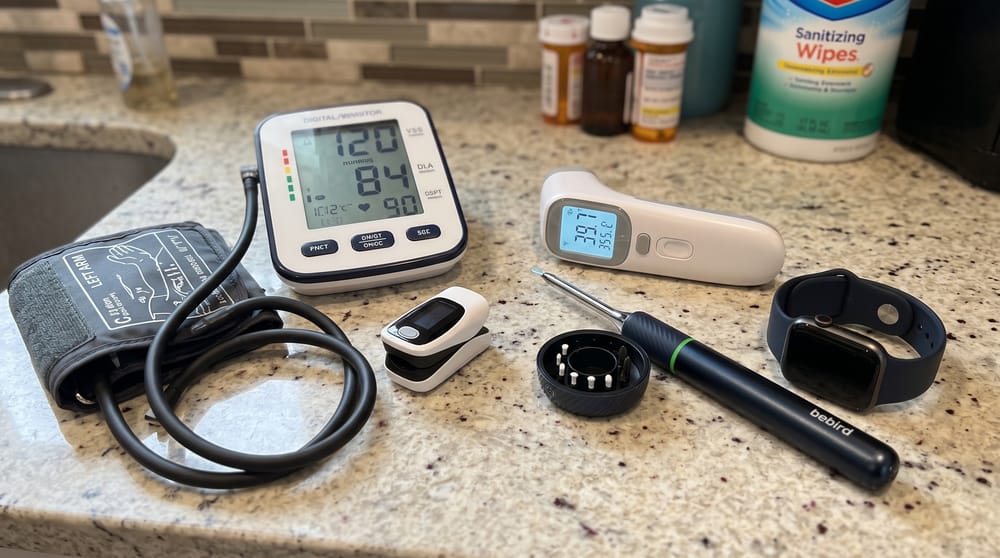
For most adults, a normal resting heart rate is about 60 to 90 beats per minute. Fever, pain, anxiety and dehydration all push it up, so check it again after you've rested, had fluids and treated the fever. What matters is the number that stays up.
Watch at home
Resting rate 60–90, or briefly higher with a fever that comes down when treated.
Be seen today
Resting rate that stays above 110, especially with other symptoms or feeling sicker.
ER now
A fast or irregular heartbeat with chest pain, near-fainting, or trouble breathing. Or a rate below 50 if you're not an athlete.
4
Your oxygen level, and its limits
A home pulse oximeter is one of the most useful tools you can own. Normal is about 94 to 100%. But it's a clue, not a verdict. Cold fingers and nail polish can throw it off, and the FDA notes these devices can read less accurately in some people, including people with darker skin. If you're struggling to breathe, believe your breathing over the number.
Watch at home
94–100% and breathing comfortably.
Be seen today
Repeatedly 92–94%, or lower than your usual, with a cough or fever.
ER now
Below 92%, especially if it's dropping. Blue or gray lips, or too short of breath to speak normally.
5
A fever's number matters less than how it behaves
A fever is your immune system working. I pay attention to how high it goes, whether it comes down with treatment, and what comes with it.
Watch at home
Under about 102°F in an adult, coming down with treatment, and drinking well.
Be seen today
Over 103°F in an adult or 102°F in a child, a fever that won't come down within 1–2 hours of treatment, or a fever that returns after you'd improved.
ER now
Fever over 103°F with a heart rate over 100, vomiting, and feeling sicker by the hour. That pattern can be sepsis.
Babies are different. For an infant under 3 months, any temperature of 100.4°F or higher means go to the ER immediately.
6
Watch what the body is doing, not just the symptom
A stomach bug is a stomach bug, until someone can't keep fluids down. These are the signs that tell me the body is falling behind and needs help:
- No urine for 8+ hours in an adult, or 6+ hours in an infant
- Can't keep any fluids down for 12–24 hours, much sooner for young children
- Dizzy or lightheaded when standing up
- Sunken eyes, no tears in a crying child
- Unusually sleepy, hard to wake, or confused
- Bloody or black, tarry stools
Any one of these moves you from "rest and fluids" to "be seen today." Confusion or someone who's hard to wake belongs in the ER.
7
Cuts and injuries: bandage, urgent care, or ER?
It's not just "is it bleeding." I look at how deep it is, whether it gapes, where it is, how it happened, and whether everything past the cut still moves and feels normal.
Home care
Shallow, edges stay together, bleeding stops with pressure, clean, normal movement and feeling.
Urgent care
Gaping edges that may need stitches, dirt or debris you can't remove, or any animal or human bite.
ER
Power-saw injuries, numbness or a finger you can't move, spurting or uncontrolled bleeding.
8
Pick the place that can do what you may need
The right setting isn't about how bad you feel. It's about what tests and treatment you might need in the next few hours.
| Setting | Best for |
|---|---|
| Home | Improving or stable symptoms, normal vital signs, and a clear plan for what would make you change course. |
| Primary care | Symptoms that linger or keep coming back, ongoing conditions, medication questions. |
| Urgent care | Same-day problems that aren't life-threatening: infections, sprains, simple cuts, a fever that won't settle. |
| ER / 911 | Anything on the list in #1, or when you may need imaging, timed blood tests, IV treatment, or a specialist right away. |
Not sure how to check these, or what they mean together?
Start with my Navigator's Field Guide: six printable one-page guides with the signs I look for, what to do at home, and when to go. Keep them on the fridge and on your phone so they're there at 2 a.m.
Your One-on-One Navigation Session with Dr. J
Understanding Where to Go—and When—is One of the Biggest Questions in Healthcare.
And it's something I want to talk through with you personally.
Inside Navigating Your Health, I'll teach you the map I use to think through the Grey Zone—the space between treating something at home, calling your doctor, going to urgent care, or recognizing that a higher level of care may be needed.
In the Guided Experience, complete all four sessions, and then let's talk one-on-one about what you learned, the questions the training brought up, and the where's, how's, and when's of navigating your health and healthcare.
Navigation Sessions are for education and learning, not evaluation of a symptom you are having now. If you think you may be experiencing a medical emergency, call 911 or seek emergency care now.
Putting it together
Two people with a cough. Two different next steps.
Day 5, slowly improving. Tired and coughing, but breathing comfortably, drinking normally, fever gone. Heart rate 84, oxygen 97%.
Rest, fluids, and a plan for what to watch.
Day 8, better then worse. The fever came back, breathing is harder, heart rate stays at 118 at rest, oxygen 91%.
This needs the ER today.
I once treated a man in his twenties who looked exactly like the second person. "I just can't seem to kick it," he told me. His X-ray showed a severe pneumonia, and he was admitted. Neither of these clues proves a diagnosis. Together, they change the next step. Worsening breathing and an illness that turns deserve attention, even when someone calls it "just a cough." I just had someone comment on one of my posts the other day that their family member died of pneumonia because they would not go in. This is the change I am trying to help people make!
Examples are illustrative; patient details have been changed.
Why I made the Navigator's Field Guide
Every shift, someone asks me, "Did I actually need to come in?" Sometimes yes. Sometimes I wish they'd come sooner. And sometimes nobody ever taught them what to look for. Most of what I do in a visit is education: what this probably is, what you can do, and what would change the plan. The Field Guide puts that education on paper, before the next fever or fall.
"I don't want you memorizing an answer. I want you understanding the decision." — Dr. J
What people are saying
“ Leslie Z
I have been going to the doctor for 15 years, why has no one explained it this way before?
“ Dave K
With so many things in the store, I am just never sure what I can be doing. Thanks, Dr. J!
“ Lindsey R
You know, Dr. J, people just need a place where they can learn these foundations.
When to Wait. How to Treat. When to Go.
The Navigator's Field Guide
Dr. J's Quick Tips · Six printable guides
- The Grey Zone — the red flags that mean go now, and the home tools worth owning
- Everyday Health — colds, coughs, infections, cuts, sprains, stomach bugs: wait, treat, or go
- Mindset and Mindfulness — a daily practice you can actually keep
- Diet, Exercise, Hormones and Peptides — what works and what to ask about
- Using the Healthcare System Better — doctor visits, labs, medications
- Your Personal Prime Health Plan — a 30- and 90-day plan on one page
$47 one-time
Instant download. Want the full map behind them? After checkout you'll have the option to add the full Navigating Your Health course.
7-day money-back guarantee
Navigating Your Health with Dr. J
Learn the map. Pack your tools. Then let's talk.
Complete the four foundational sessions, learn how to think through the Grey Zone, and put the six health tools to work in your own life.
Then, in the Guided Experience, we'll sit down one-on-one and talk about what you learned, the questions you still have, and the where's, how's, and when's of navigating your health and healthcare.
I'm not here to tell you to avoid healthcare. I'm here to teach you how to navigate it.
Guided Experience · $1,997 one-time · 7-day money-back guarantee
Also available: Self-Guided ($997) and Private Navigation ($4,997)
Navigation Sessions are educational and are not intended to evaluate a current symptom or replace medical care. If you think you may be experiencing a medical emergency, call 911 or seek emergency care now.
Questions
No. The Field Guide is education. It helps you know when home care is reasonable, what to monitor, and when to get evaluated. If you think you're having an emergency, call 911.
Six printable PDF guides, available to download right after checkout. Print them, save them to your phone, or both.
No. They're written for parents and everyday adults, in plain language.
Yes. Navigating Your Health is the four-session course behind the Field Guide. You can go through it on your own, or choose the Guided Experience or Private Navigation to talk it through one-on-one with me.
You're covered by a 7-day money-back guarantee. To request a refund, email info@primeyourhealth.org within 7 days.
This page is general education, not medical advice, and it can't account for your specific history. Adult values are shown unless noted; children's normal ranges differ. The Field Guide does not create a physician–patient relationship. In an emergency, call 911.
© 2026 Prime Your Health · primeyourhealth.org